
Ambient Sense
The Ambient Sense delivers continuous ambient air intelligence by combining multi-gas electrochemical sensing with optical particulate quantification and acoustic monitoring. It serves as an essential telemetry node for municipal environmental programs, industrial emissions monitoring, and community health networks.
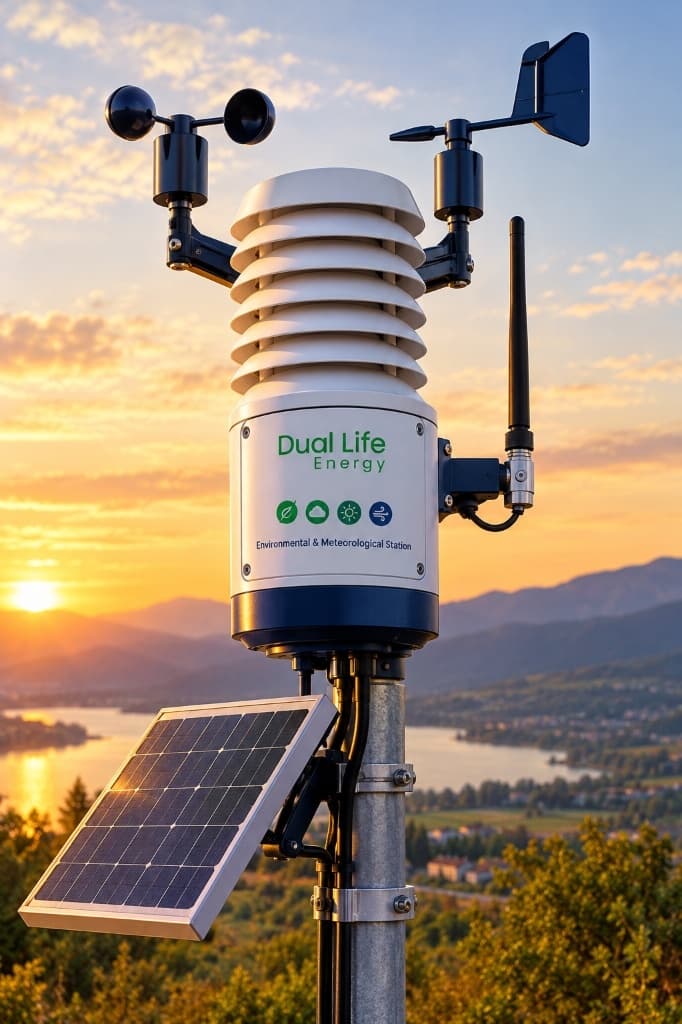
Engineered for continuous telemetry & high reliability.
The Ambient Sense architecture integrates discrete optical, chemical, and physical sensor elements with low-latency edge buffering for dependable operational performance.
Engineered for Global Environmental Standards
Our environmental telemetry hardware is designed to simplify building compliance audits, ESG reporting, and automated HVAC integration.
LEED v4.1 Compliant
Meets EQ Credit criteria for Enhanced Indoor Air Quality strategies & continuous particulate tracking.
WELL v2 Certified Ready
Aligned with Air Feature A01, A05, and A08 for multi-parameter real-time telemetry verification.
ASHRAE 62.1 Compatible
Optimized for Demand-Controlled Ventilation (DCV) closed-loop HVAC actuation via BACnet & Modbus.
RESET Air Grade Ready
Hardware calibrated for accredited indoor air quality data feeds with cloud payload verification.
Monitored Environmental & Gas Parameters (15)
Real-time measurement channels active on the Ambient Sense baseline architecture.
Ultra-fine particulate matter with diameter less than 1.0 µm
Fine inhalable particles with diameters 2.5 µm and smaller
Inhalable coarse particles with diameters 10 µm and smaller
Carbon Dioxide concentration indicating ventilation efficacy
Carbon Monoxide poisonous gas from incomplete combustion
Nitrogen Dioxide combustion and vehicular emissions byproduct
Sulfur Dioxide industrial and fossil fuel combustion gas
Ozone photochemical oxidant and respiratory irritant
Ammonia agricultural and industrial chemical emissions
Methane greenhouse gas and combustible hydrocarbon
Total Volatile Organic Compounds off-gassing from building materials
Ambient dry-bulb thermal measurement
Relative air moisture saturation percentage
Acoustic sound pressure level monitoring
Standardized Air Quality Index computed from multiple criteria pollutants
Sensor Technology Principles
Educational overview of physical and optical sensing methodologies deployed across this platform.
Optical / Laser Scattering
Uses focused laser light scattering to detect discrete particle diameters and compute mass concentration per unit volume in real time.
NDIR (Non-Dispersive Infrared)
Measures gas absorption at specific infrared wavelengths for high-stability, drift-resistant carbon dioxide and methane quantification.
Electrochemical Sensing
Quantifies target gas molecules through chemical oxidation or reduction at an electrode, yielding high sensitivity in parts-per-billion and parts-per-million ranges.
Photoionization Detection (PID)
Emits high-energy ultraviolet light to ionize volatile organic gas molecules, delivering broad-spectrum detection of volatile organic compounds.
Solid-State Environmental Sensing
Integrated semiconductor and capacitive sensors for high-accuracy thermal, relative humidity, pressure, and ambient illuminance data.
Connectivity & Software Topology
Edge Data Transport
Supported physical and wireless interfaces
Software Platform Compatibility
Integrated digital control layers
Real-time monitoring across web, mobile & facility displays.
Every sensor stream is instantly ingested into the DLE Cloud Platform, offering multi-tenant analytics, historical heatmaps, and zero-latency TV lobby displays.
24-Hour Particulate Concentration Trend
Continuous 1-minute averaged telemetry buffer
Connecting physical sensing to autonomous optimization.
Every DLE monitoring device integrates directly into the DLE Air Intelligence platform, transforming raw telemetry into energy-efficient ventilation control and predictive facility health.
Sense
Transducer Ingestion
Optical laser scattering and dual-channel NDIR ambient sampling.
Connect
Edge Transport
Encrypted payload routing via RS-485 Modbus, Wi-Fi, 4G, and MQTT.
Understand
Contextual Analytics
Spatial heatmaps, dynamic baselines, and thermal load analysis.
Optimize
Closed-Loop Control
Demand-Controlled Ventilation (DCV) actuation and automated BMS control.
Target Operating Environments
Municipal Smart Environmental Networks
Validated compatibility and optimized telemetry profiles for this environment.
Petrochemical & Industrial Perimeters
Validated compatibility and optimized telemetry profiles for this environment.
Port & Transport Corridor Monitoring
Validated compatibility and optimized telemetry profiles for this environment.
Urban Community Exposure Studies
Validated compatibility and optimized telemetry profiles for this environment.
Commercial Campus Environmental Intelligence
Validated compatibility and optimized telemetry profiles for this environment.
Technical Data & Parameters
| Technical Specification | Specification Value / Engineering Architecture |
|---|---|
| Target Gases | CO2, CO, NO2, SO2, O3, NH3, TVOC, CH4 |
| Target Particulates | PM1.0, PM2.5, PM10, AQI |
| Gas Sensor Suite | High-stability Electrochemical + NDIR + PID |
| Acoustic Measurement | MEMS Noise Sensor (dBA) |
| Transmission Methods | 4G LTE, LoRaWAN, RS-485, Wi-Fi |
| Power Options | Grid AC / DC Supply / Solar Hybrid System |
| Battery Backup Duration | To be confirmed |
| Enclosure Construction | To be confirmed (UV & Weather Resistant) |
| Operating Temperature Range | To be confirmed |
Datasheets & Technical Literature
Ambient Sense Engineering Datasheet
Continuous Ambient Air & Gas Monitoring
Deployment & Maintenance Guide
Frequently Asked Questions
Related Monitoring Systems
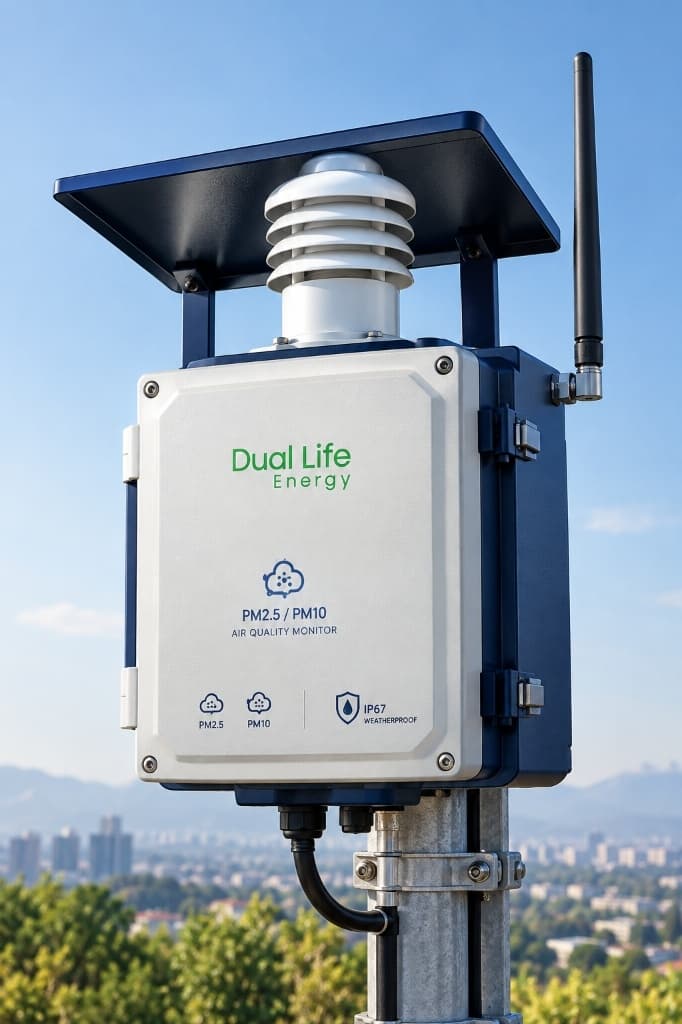
Ready to evaluate Ambient Sense for your facility?
Submit your project parameters and our solutions team will provide architectural integration guidance and commercial quote estimates.